
Key Points
- US Air Force personnel at the RAF Lakenheath base in Suffolk, England, responded to suspected unauthorised drone activity on Friday night, marking a tense security incident at a facility hosting American military aircraft.
- According to an official US Air Force spokesperson, no personnel, aircraft, or infrastructure were affected during the incident, and American forces continue to work closely with UK host nation counterparts to ensure base security.
- The drone sighting follows recent security escalations, including US Justice Department charges announced earlier in the week against three men described as “Iranian operatives” for their role in an alleged terrorist plot targeting RAF Fairford.
- Flight-tracking data and media reports indicated that the US military recently removed aircraft—including B-1 bombers and refueling jets—from British bases such as RAF Fairford and RAF Mildenhall amid heightened threat levels linked to the US-Israeli conflict with Iran.
- Senior Iranian security figures, including Mohsen Rezaei and advisers to Supreme Leader Mojtaba Khamenei, have previously warned that the geopolitical conflict could expand to target US military installations beyond the Middle East, including European bases.
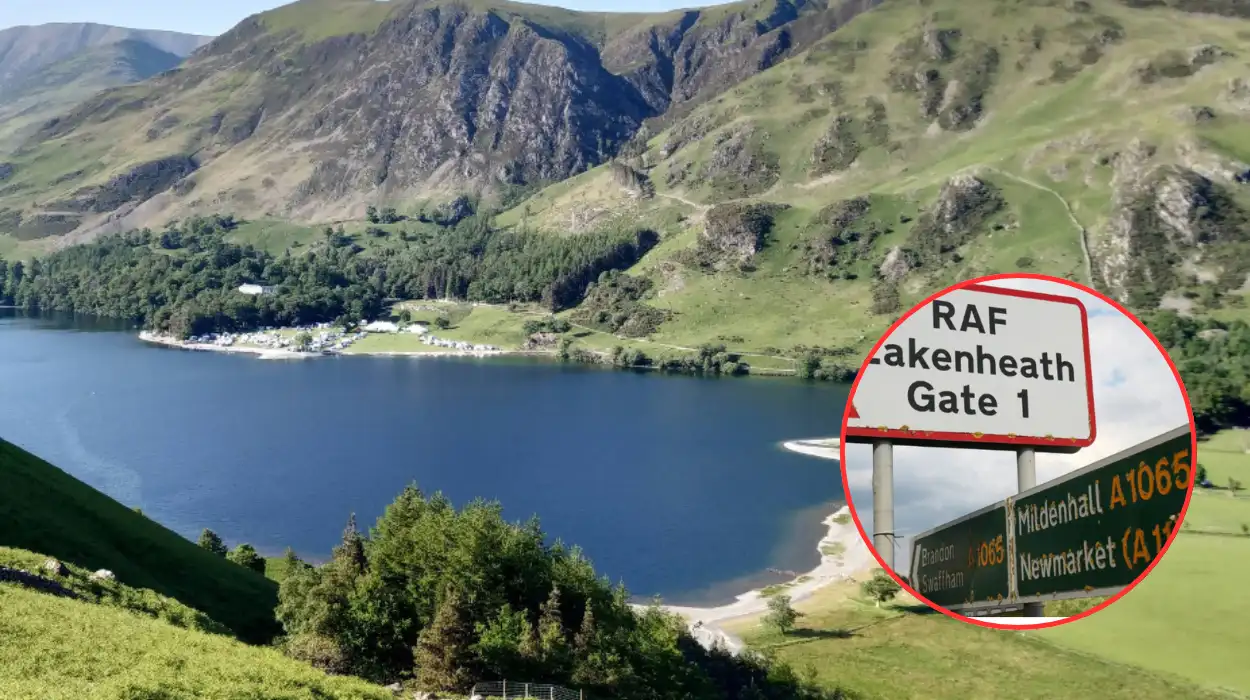
London (Britain Post News) November 14, 2026 – Security measures have been sharply intensified across key military installations in the United Kingdom after US forces responded to suspected unauthorized drone activity over a major air base. The incident at RAF Lakenheath in Suffolk unfolded against a backdrop of escalating geopolitical tensions, arriving mere days after federal prosecutors in the United States unsealed terrorism charges against alleged operatives linked to hostile state actors, and as Western intelligence agencies grapple with mounting threats to European defense infrastructure.
What Happened During the Suspected Drone Incident at RAF Lakenheath?
As reported by military spokespersons and wire services including Reuters and The Guardian, US Air Force personnel stationed at RAF Lakenheath in Suffolk responded to suspected unauthorized drone activity on Friday evening. The installation, which hosts the 48th Fighter Wing of the US Air Force, remains one of the primary strategic hubs utilized by American forces in the United Kingdom.
Addressing the security event, a US Air Force spokesperson stated that “no personnel, aircraft or infrastructure were affected” during the episode. The spokesperson further emphasized ongoing bilateral cooperation, noting: “We continue to work closely with our host nation counterparts to ensure the safety and security of our US service members, US and host nation civilians, contractors, and all of our families.”
Earlier in the week, leadership at RAF Lakenheath had publicly urged local community members via official social media channels to remain vigilant and report any suspicious behavior, explicitly highlighting unauthorized drone flights as a concern and reinforcing that “our strongest security asset is an observant community.”
How Does the Lakenheath Drone Sighting Connect to the RAF Fairford Terror Plot Charges?
The drone sighting at RAF Lakenheath did not occur in isolation; it followed closely on the heels of major counter-terrorism developments concerning another British facility, RAF Fairford. Earlier in the week, the US Justice Department announced criminal charges against three men identified as “Iranian operatives” for their alleged involvement in orchestrating a terrorist plot directed at RAF Fairford.
According to detailed US charging documents, a suspect identified as Mohammad Ali al-Hassani directed individuals to drive to the base using multiple white vans—some of which allegedly contained containers filled with fuel. Investigators stated that al-Hassani had previously financed the acquisition of metallic objects intended to serve as shrapnel for an explosive attack.
The plot came to light after a local farmer alerted authorities upon observing suspicious activity around the perimeter involving a group of men and white vans. In response to the uncovered threat, the United States military withdrew all B-1 bombers from RAF Fairford. Furthermore, British counter-terrorism police charged two British nationals last month with serious national security offenses connected to the Fairford breach, including assisting a foreign intelligence service—believed to be Iran—and entering a prohibited military area for purposes prejudicial to the safety of the UK.
What Led to the Redeployment of US Aircraft From British Bases?
Beyond the incidents at Lakenheath and Fairford, broader strategic realignments have impacted American military assets across East Anglia. Flight-tracking data analyzed earlier in the week revealed that the US military had removed at least a dozen aircraft from RAF Mildenhall.
According to reporting by The Wall Street Journal and international news agencies, the sudden redeployment of refueling aircraft and bombers away from British soil was executed in direct response to specific threat assessments involving Iran. These movements coincide with the broader military engagement stemming from the US-Israeli conflict against Iran, which escalated earlier in the year and prompted retaliatory missile and drone launches across the Middle East.
Adding to the strategic alarm, Iranian security chief Mohsen Rezaei stated in a broadcast interview that Tehran would consider striking US military bases outside the Middle East—specifically naming European installations—if those facilities were actively leveraged to launch attacks against the Islamic Republic. These warnings echo previous statements from Iranian officials and advisers to the country’s supreme leadership, who have openly mused about widening the geographic theater of the ongoing conflict.
Background of the Particular Development
The security posture governing foreign military installations stationed within the United Kingdom is managed through complex, multi-layered bilateral agreements, notably the NATO Status of Forces Agreement (SOFA) and specific base-usage frameworks. While Royal Air Force (RAF) stations such as Lakenheath, Mildenhall, and Fairford remain under British sovereign command, specific zones are operated and utilized by the United States Visiting Forces (USVF). In recent years, domestic intelligence agencies, including MI5, have repeatedly warned that state-backed actors—most notably Russia and Iran—have significantly escalated hostile reconnaissance, cyber operations, and physical sabotage attempts targeting critical national infrastructure and military defense sites across Western Europe. The convergence of active proxy conflicts in the Middle East and heightened domestic threat levels has forced British and American defense planners to reassess perimeter security, airspace restrictions, and counter-drone defense mechanisms at all overseas operating bases.
Prediction
How These Security Incidents and Drone Threats Can Affect UK-US Military Cooperation and Defense Infrastructure
The ongoing security alerts and reported sabotage plots involving British-hosted US air bases are anticipated to influence national defense policy and operational protocols in several critical ways:
- Acceleration of Counter-UAS (C-UAS) Deployments: The recurrence of unauthorized drone sightings near sensitive military perimeters will likely drive the rapid procurement and permanent installation of advanced electronic counter-drone jamming and kinetic interception systems across UK-based US facilities.
- Heightened Perimeter Security and Surveillance: Local law enforcement and base security wings are expected to maintain an elevated threat posture, increasing intelligence-sharing with rural communities and local farmers to deter suspicious surveillance and reconnaissance operations.
- Strategic Reassessment of Asset Positioning: Heightened threat levels from state actors could lead to more frequent rotations and decentralization of high-value strategic assets, balancing operational readiness against the vulnerability of stationary overseas hubs.